

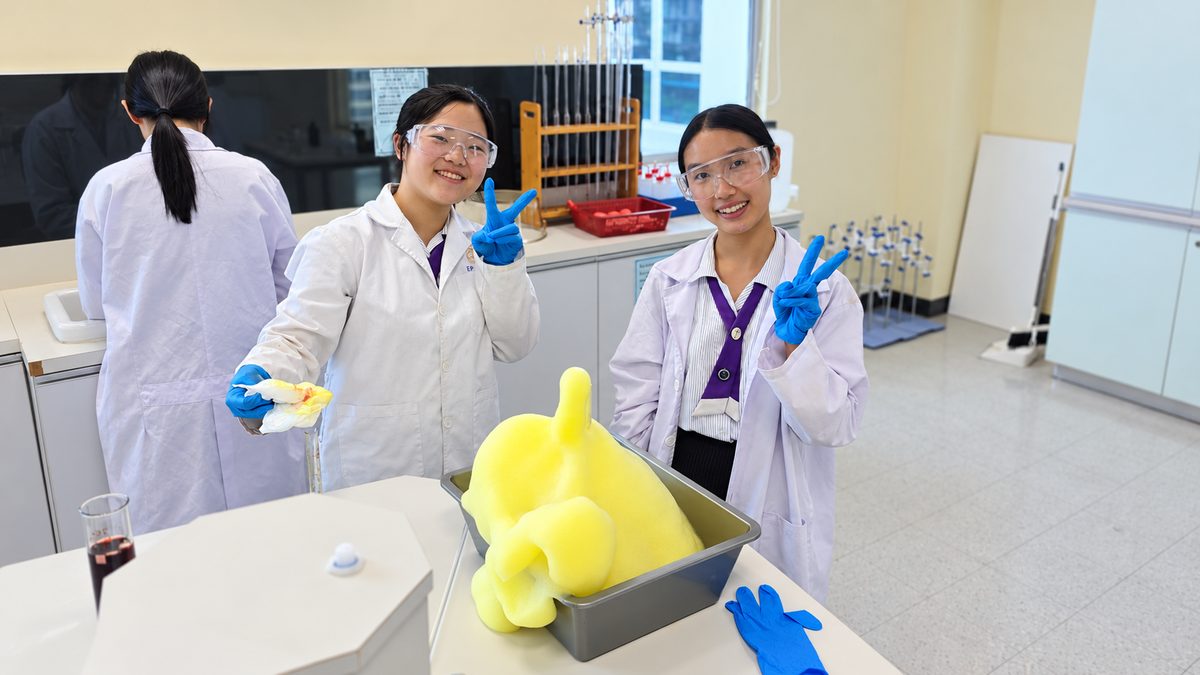
The Chemistry Society CCA can provide a bridge between formal academic learning and informal scientific exploration. In the classroom, students may learn that density is related to mass and volume. They may learn about concentration, solutions, chemical reactions, catalysts, and reaction rates. However, seeing these concepts represented physically through a colourful density demonstration or a dramatic chemical reaction can create a much stronger conceptual and emotional connection.
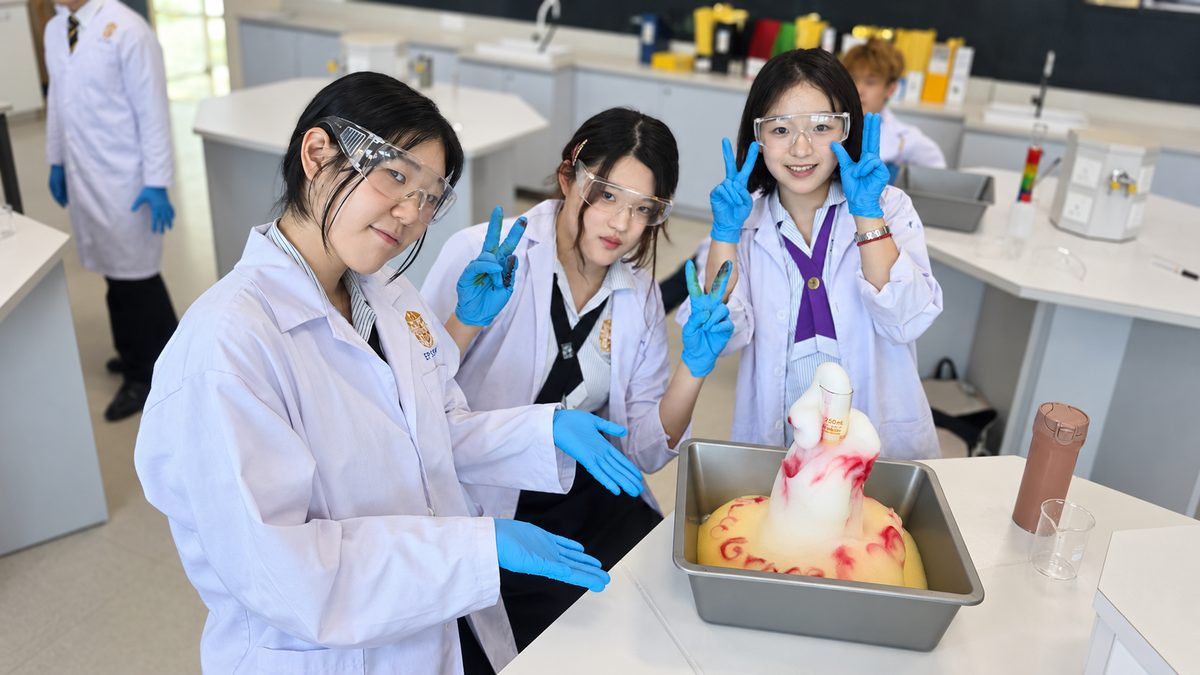
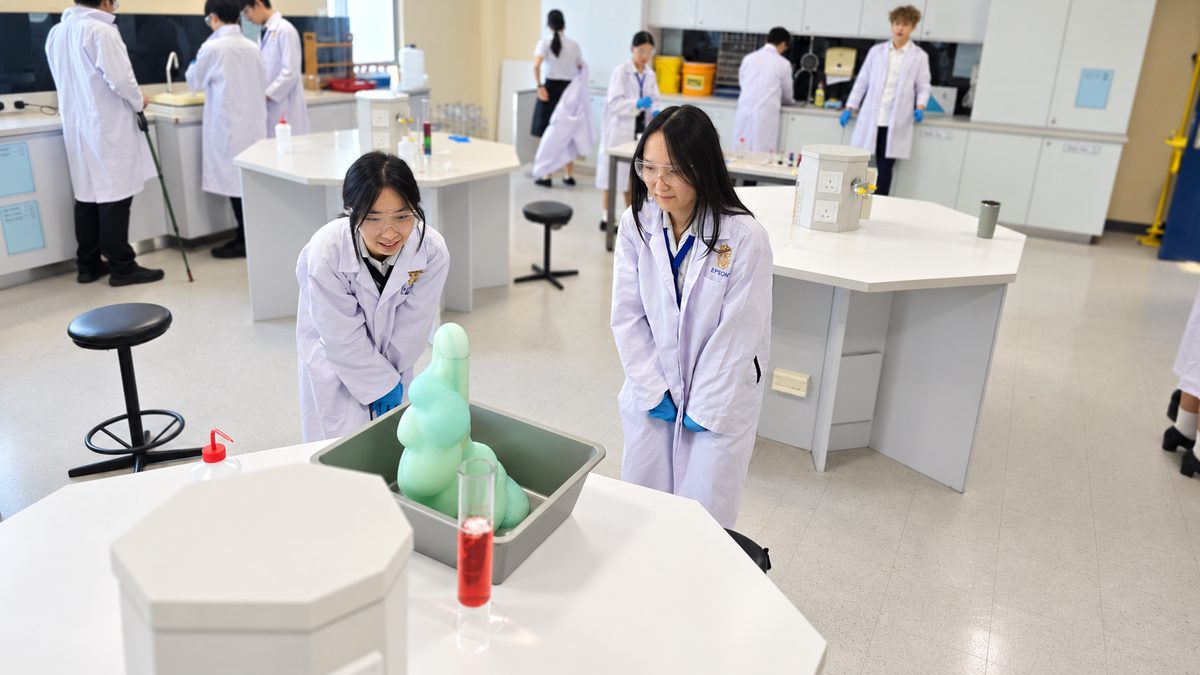
The two activities shown in the pictures were selected because they provide particularly accessible demonstrations of important chemical concepts.
The first is the Water Density Rainbow.
This activity uses solutions of different concentrations to create liquids with different densities. When the solutions are carefully introduced into a container, the liquids can form distinct layers, producing a rainbow-like visual effect.
The second is the Elephant Toothpaste experiment.
This demonstration involves the rapid decomposition of hydrogen peroxide, with a catalyst accelerating the reaction. The resulting oxygen gas becomes trapped in soapy water, producing a large quantity of foam.
Although the two activities appear very different, they share an important educational characteristic: both make invisible scientific processes visible to students.
Density itself cannot be seen directly. Students observe its consequences when liquids form layers.
Likewise, molecules decomposing and reacting cannot be seen directly. Students observe the macroscopic consequence of the reaction in the form of rapidly expanding foam.
This movement from the microscopic or abstract level to the observable level is one of the most valuable features of practical science education.
Mr Mahesh Warrier
Head of Chemistry