
In 2026, our students do not just use technology; they live within a digital ecosystem. From smart homes to AI-integrated transport, the digital and physical worlds have merged. Consequently, ‘digital literacy’ has evolved from a technical elective into a vital life skill. We believe being ‘tech-savvy’ is no longer enough; our students must be ‘tech-wise’, mastering digital tools while maintaining a grounded, healthy balance with the physical world.
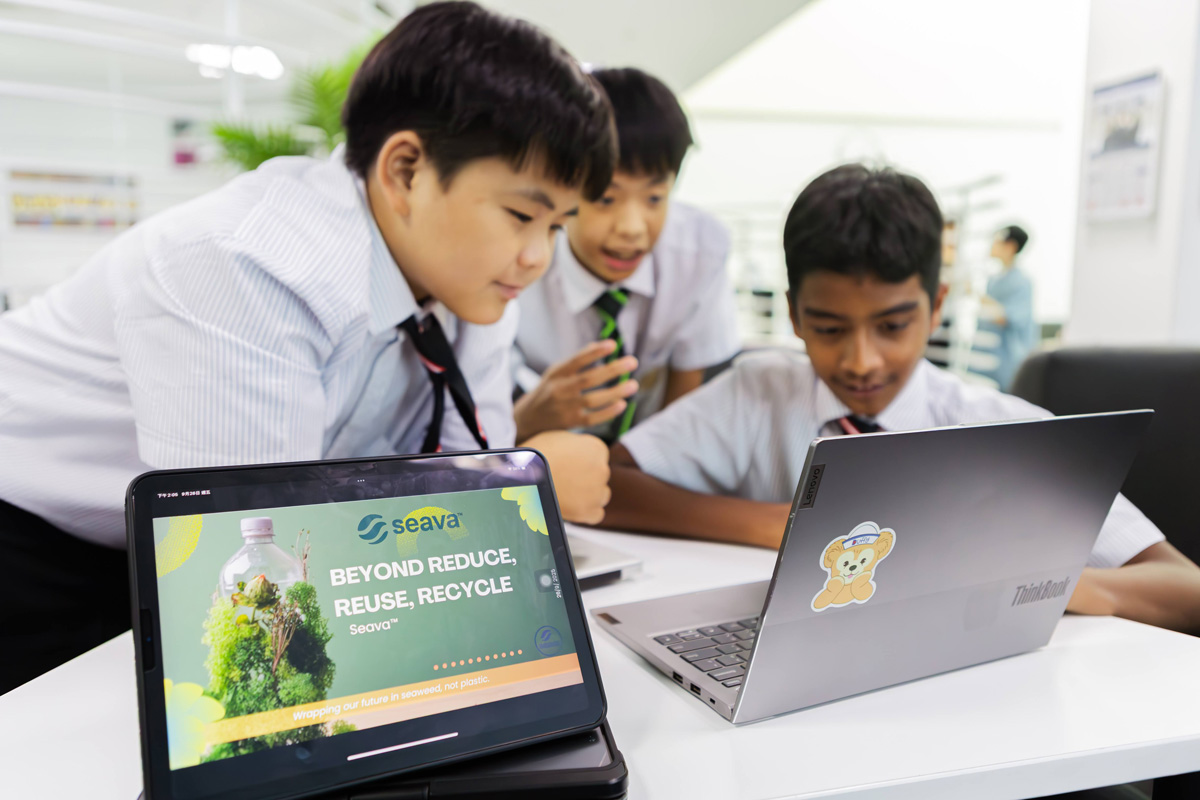
True literacy in the AI era centres on critical thinking and human agency. In our Year 6 and 8 Python lessons, students do not just memorise syntax; they develop the arithmetic logic that shapes our modern world, building resilience through complex problem-solving. Our Year 9 students are currently exploring ‘cybersecurity’, learning that protecting a digital identity involves ethical scepticism as much as strong passwords. As the OECD Learning Compass notes, literacy now “requires the ability to navigate through unfamiliar digital contexts and find direction in a responsible way.” By acting as the ‘human-in-the-loop’, our students learn to direct AI with purpose, ensuring they evaluate information ethically instead of consuming it passively.
However, digital mastery requires a strong analogue foundation. We embrace ‘intentional friction’, the idea that some tasks are best handled slowly and physically. This journey begins in Year 3 with mouse control and touch-typing, where students develop the muscle memory and fine motor skills necessary to free their minds to focus on creative expression. This balance is vital; research from the University of Cambridge on ‘Cognitive Load Theory’ suggests that balanced technology use, incorporating non-digital breaks, significantly improves deep focus and long-term information retention. By stepping away from the screen, students consolidate their learning and protect their digital wellbeing.
By fostering this balance, we prepare our students to lead with both high-tech capability and high-touch empathy. We are incredibly proud of all our students’ recent progress, from the creative logic in Year 4 Scratch to the data mastery in Year 7 spreadsheets. These achievements prove that when our students balance digital prowess with critical thinking, they do not just use the future, but are on the path to shaping it.
Mr Raihaan Chaudary
Head of Digital Learning and Teacher of Computer Science