

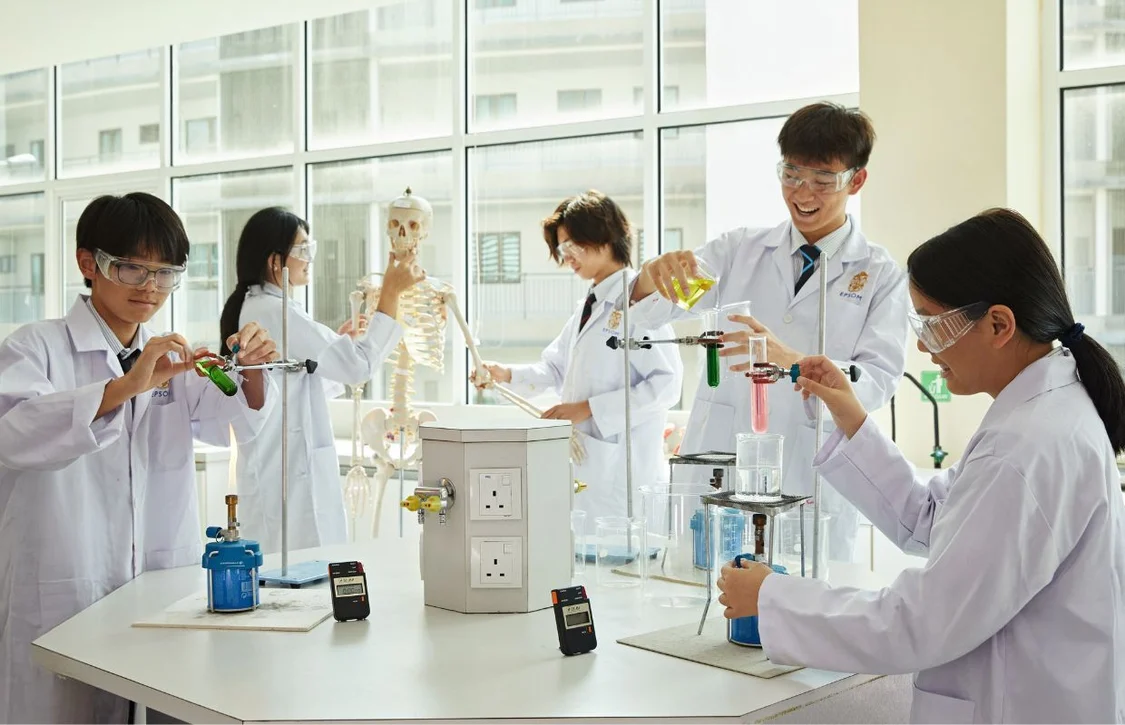
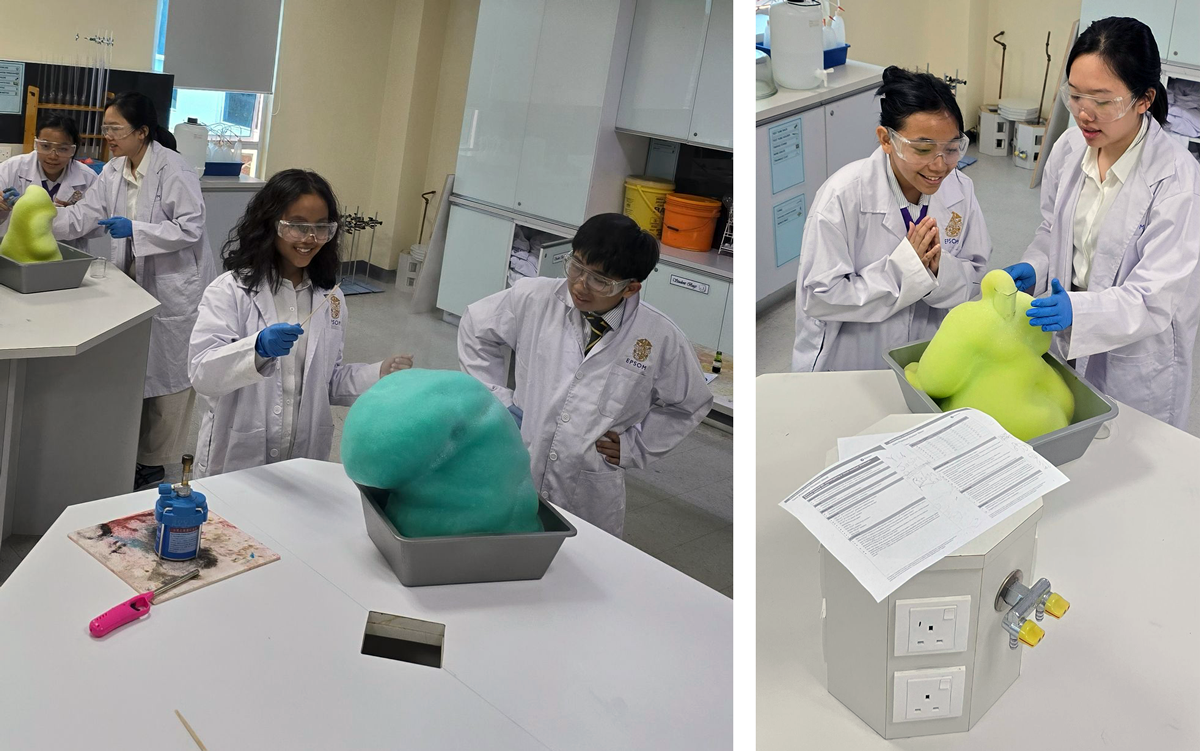
Last Wednesday, Epsom’s Chemistry Society transformed its lab into a stage for one of science’s most visually spectacular demonstrations: the Elephant Toothpaste experiment. The session captivated members as they successfully decomposed hydrogen peroxide into water and oxygen gas at an explosive rate.
The experiment, led by the Head of Chemistry, Mr Mahesh Warrier, involved combining 30% hydrogen peroxide with a concentrated solution of potassium iodide, which acted as a catalyst. The rapid decomposition released a massive volume of oxygen gas, which, trapped within a column of soap and food colouring, erupted in a vibrant, steaming foam. The controlled exothermic reaction not only produced a high stream of foam but also provided a tangible lesson in reaction kinetics, catalysis, and gas laws.
Such engaging activities, championed by resources from the Royal Society of Chemistry (RSC), are far more than just entertaining displays. They are crucial for holistic scientific development. The RSC provides rigorously tested protocols and safety guidelines, ensuring students apply current best practices and modern experimental techniques in a secure environment.
This hands-on approach moves beyond textbook theory, cementing abstract concepts like decomposition, catalyst function, and exothermic reactions into lasting knowledge. Furthermore, students enhance vital skills: meticulous measurement for reagent preparation, keen observation for data recording, and collaborative teamwork to execute the experiment safely. These activities foster a practical, inquisitive mindset essential for future scientists and innovators, proving that chemistry is not just studied, but experienced.
Mr Mahesh Warrier
Head of Chemistry